
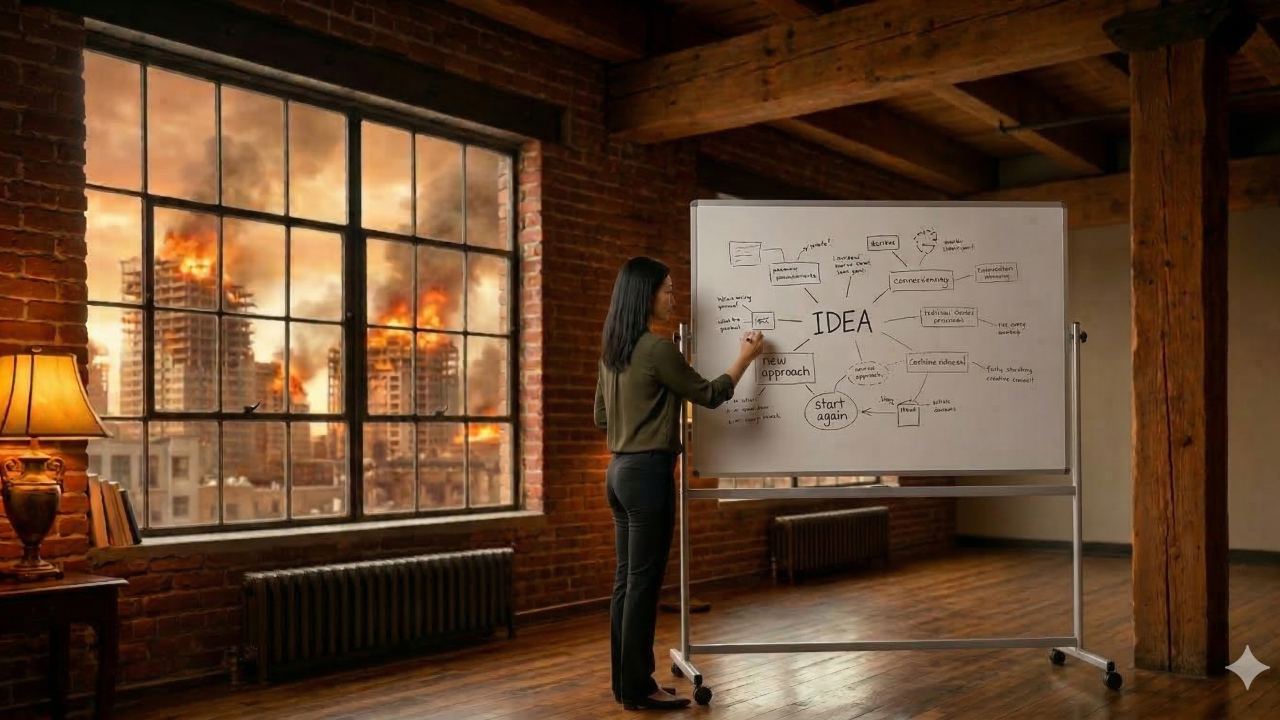
Don't Let a Good Crisis Go to Waste
Apr 10, 2026By Trista Harris, Philanthropist Futurist and President of FutureGood
Trista Harris is a Philanthropist Futurist and President of FutureGood. Connect with her on LinkedIn or reach out to her by email at [email protected].
We have a complicated relationship with crisis.
When things fall apart, the instinct is to stabilize, restore, and return to normal as quickly as possible. Get back to the meeting agenda. Get back to the strategic plan. Get back to the way things were.
But here is the question worth sitting with: was the way things were actually working?
The status quo is not a neutral thing. It is a set of choices that accumulated over time, often made by people who are no longer in the room, in service of a vision that may no longer reflect our values. It was designed to produce exactly the outcomes it has been producing. And in most of our sectors, those outcomes have included persistent inequity, chronic burnout, and a stubborn gap between what we say we believe and how we actually operate.
A crisis does not create problems. It reveals them.
When the ground shifts under your feet, what you are really experiencing is the collapse of arrangements that were never as solid as they appeared. Systems that seemed permanent. Assumptions that went unexamined. Structures that survived not because they were working, but because no one had enough leverage to change them.
That leverage just arrived.
This is the insight embedded in one of my favorite pieces of strategic wisdom: never let a good crisis go to waste. It is not a cynical observation. It is a deeply hopeful one. It means that the moment of maximum disruption is also the moment of maximum possibility. When everyone around you is asking what comes next, you have a rare opportunity to help answer that question.
Futurists know this. Chaos is not the enemy of vision. It is the condition that makes vision necessary. When the old maps stop working, people start looking for someone who has already been imagining the new terrain.
So if your organization is in the middle of something hard right now, I want to offer a reframe. The overwhelm you are feeling is not a sign that something has gone wrong. It is a sign that something is opening up.
The question is not how do we get back to normal. The question is: what do we want to build now that we have this chance?
Dream bigger than you did before the crisis. Not in spite of the difficulty, but because of it. The future belongs to the leaders who use this moment to close the gap between the world as it is and the world as it should be.
The crisis gave you the opening. What you do with it is up to you.
Let’s figure out what that looks like, together. Join Trista for a continuation of this discussion on Wednesday, May 6 at 2pm EDT/11am PDT.
