
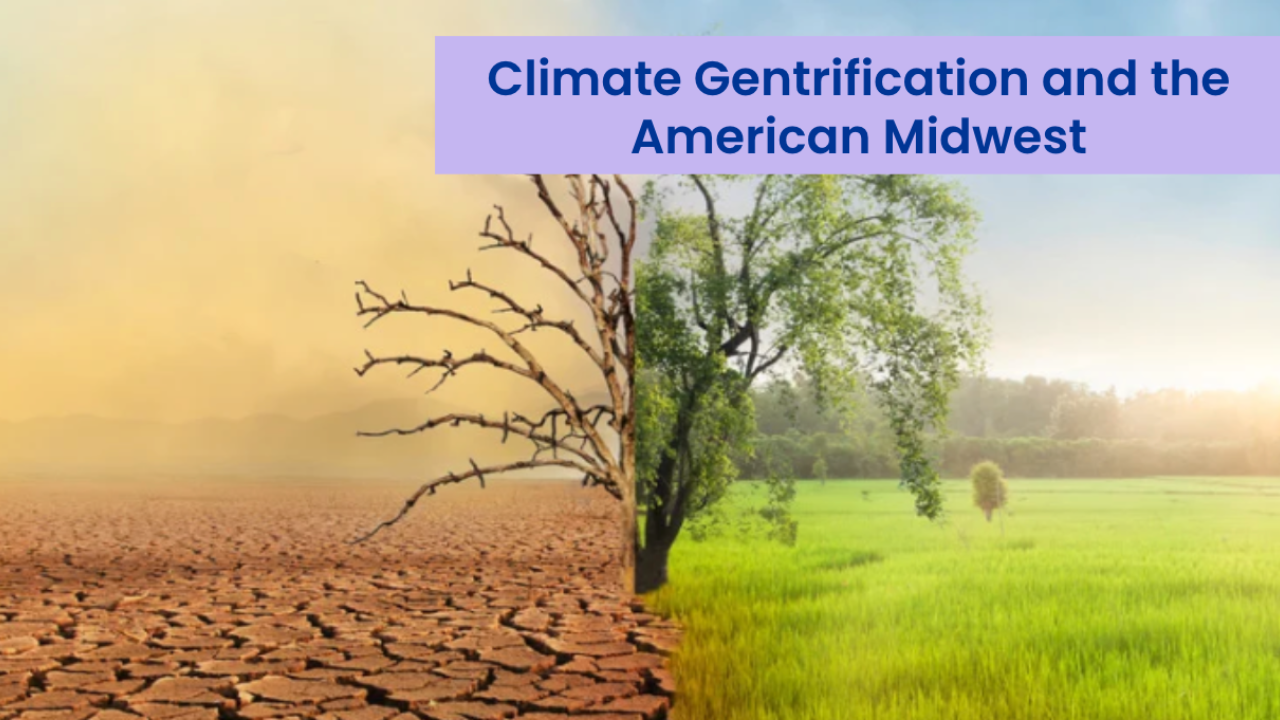
October 2026 - Trend Spotting - Climate Migration
Oct 16, 2026
|
Trends We're Watching |
|
October 2026 FutureGood is a consultancy focused on helping visionary leaders build a better future. Through strategic visioning, keynotes, retreats, and online learning, FutureGood helps thought leaders (like you!) to deploy futurism. |
|
We are watching so many interesting trends each month that we've decided to share them with our community. If you want us to look out for a specific subject, reach out and let us know! |
|
|
Climate Migration |
|

|
Climate migration is already underway inside the United States, and the Great Lakes region is becoming a primary destination. Insurance drives the timing: flood-prone counties lost more than 63,000 residents last year, even with no named storm making US landfall, as rising premiums turned homes unmortgageable and unsellable. Cities like Detroit, Buffalo, Duluth, and Milwaukee offer fresh water, lower hazard risk, and infrastructure built for larger populations than they hold today. |
|
What this could mean for the social sector: The affluent will move first, and Miami already shows the pattern: high ground once considered undesirable became the most valuable land in the city once flooding began, and longtime residents absorbed rising rents without capturing any of the appreciation. The Great Lakes region has a rare advantage Miami didn’t have, which is warning time before the wave arrives. Social sector organizations in Detroit, Buffalo, Cleveland, and Milwaukee have a narrow window to build anti-displacement infrastructure now, including community land trusts, tenant protections, and homeownership programs that let current residents share in rising property values. Funders and nonprofits who wait until migration shows up in the data will arrive in neighborhoods that needed protection years earlier. |
|
|
Refer a friend |
|
FutureGood values referrals from staff, strategists, clients, and friends of the organization. When you introduce us to an organization that becomes a paying client, we say thank you with a 5% referral fee. A referral is a direct introduction to an organization we haven't been in touch with before, where your introduction is the reason they end up hiring us. You make the introduction. We take it from there: the sales conversations, the proposal, the contract, and the project design. Tell us before you make the introduction, or at the same time. Email us with the name of the organization and the person you're introducing us to. Can't accept a referral fee? We'll make a charitable donation instead. Thank you for helping us connect more organizations to the power of strategic visioning, futurism, and future-focused leadership! Full details: FutureGood Referral Program |
|
|
|

|
Cincinnati has released a climate migration readiness plan addressing housing, infrastructure, transportation, and community resilience, putting it ahead of most regions that haven’t started this planning. The United States has no rules restricting where people can move, unlike the visa systems shaping migration in Europe, so cities and states may begin competing to attract newcomers with skills in healthcare, technology, or hospitality. That competition could produce incentive programs on one side and public backlash over who a region does or doesn’t welcome on the other. |
|
What this could mean for the social sector: Foundations and family offices have an opening to fund research and regional planning while migration patterns are still taking shape, which gives communities lead time to prepare. Nonprofits in receiving regions should start mapping how population growth will shift demand for their services, since new residents often take time to join the tax base while their service needs begin right away. Regions losing population face a parallel planning challenge: shrinking school enrollment, declining tax revenue, and service systems built for people who have moved elsewhere. The social sector has a role at both ends of this migration, preparing destination communities to absorb growth equitably and helping origin communities plan for contraction while supporting the residents who remain. |
|
|
Learn to spot trends relevant to your work |
|
If you want to learn more about futurism, including how to spot and make sense of these trends, you can! Sign up for our online learning program, FutureGood Studio, and empower yourself to be future-ready! |
|
|
|

|
Crops are already moving north because of climate change, and Joe Franklin’s 78-acre citrus farm in central Georgia is proof, now growing fruit that used to require a Florida climate. The pattern is showing up globally, with coffee-growing regions shifting in India, Vietnam, and China, which forces the organizations that source from cooperatives to build new relationships as production moves. Worldwide crop yields could decline by as much as 30 percent by 2050 as drought and flooding intensify, and researchers are racing to develop warmer-weather varieties fast enough to keep pace. |
|
What this could mean for the social sector: Communities built around a specific crop, including their schools, congregations, and local economies, will need to project where that crop’s migration takes them and whether their institutions follow it north. Foundations have an opportunity to fund new seed varieties and agricultural practices, and to assess how shifting crop geography will affect their current grantees working in farming regions. Universities and nonprofits serving agricultural communities should ask now what happens to their student pipeline and program relevance if the workers and families tied to these crops relocate. |
|
|
|

|
WE ACT for Environmental Justice has spent more than 35 years building a movement that connects hyper-local, place-based organizing in Manhattan with policy advocacy across county and state lines, from reducing diesel truck pollution to positioning climate as a public health emergency. New York Citys vulnerability has become impossible to ignore since Superstorm Sandy, compounded by over-development in Brooklyn, worsening air quality from traffic congestion, and ongoing beach and shoreline erosion across Manhattan, Brooklyn, Queens, and Staten Island. During hurricane season, city residents understand theyre one storm away from historic flooding and the mass displacement that would follow. |
|
What this could mean for the social sector: WE ACTs durability offers a model worth studying: organizations that last 35 years in this space combine grassroots resilience with the ability to convene researchers, policymakers, and community members across generations and identities toward shared legislative wins. Environmental justice organizations in other vulnerable coastal cities can learn from WE ACTs approach of building hyper-local trust and cross-jurisdictional policy influence at the same time. For funders, the compounding risks facing NYC, including erosion, over-development, and storm exposure, point to the need for sustained, long-term investment in dense urban coastal areas, made now while resilience can still be built ahead of the next major storm. |
|
|
Got questions about the future? |
|
The future is moving fast. Join us for our next Futurism Q&A and get real answers from a trained futurist. Add it to your calendar now> |
|
|
|

|
Natural-hazard damage has been shown to widen the White-Black wealth gap, and locally rooted business owners face what Sarita Turner calls triple exposure: their home, their business, and their surrounding customer base can all be hit at once. The Small Business Administration approved disaster recovery loans at nearly double the rate in majority White communities compared with majority Black communities, and Black-owned firms received only 1.6 percent of first-round Paycheck Protection Program funding despite representing 10 percent of small businesses. Climate migration compounds this further, because a business can reopen its doors and still struggle to recover if its customer base has relocated, its workforce can’t return, or redevelopment prices out the people who made the neighborhood viable. |
|
What this means for the social sector: Philanthropy is beginning to move upstream, with disaster giving for resilience and mitigation nearly tripling from 2.1 to 6.0 percent between 2022 and 2023, and funders like Unbound Philanthropy supporting Cincinnati’s climate migration planning before displacement occurs. Equity belongs at the center of that shift, because restoring the pre-disaster economy would also restore its exclusion of business owners with the least access to capital. Funders can act now by financing the missing data on which local businesses face this exposure, investing in preparedness ahead of a federal disaster declaration, and backing the community intermediaries who know which owners need support. The deeper test comes years later: which businesses survived, who returned, who got the contracts, and who owns the businesses in that neighborhood once recovery is complete. |
